
Shadow
Broccoli Extract Benefits: Why Sulforaphane Is the Most Underrated Compound in Your Diet

Broccoli Extract Benefits: Why Sulforaphane Is the Most Underrated Compound in Your Diet

Health
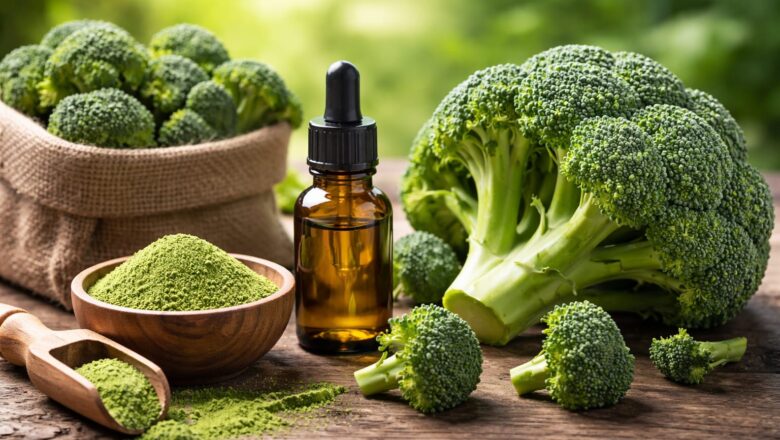
Most people know broccoli is good for them, but very few realise how little of its most powerful compound they're actually getting from a few florets on their plate. Sulforaphane, the phytonutrient behind the most studied broccoli extract benefits, has decades of serious nutritional science behind it, yet it barely registers in everyday health conversations. The distance between eating broccoli occasionally and truly using what this plant can do for your body is much wider than most expect. What Makes Sulforaphane So Remarkable Broccoli sprouts, tiny 3-to-4-day-old seedlings, can carry up to 50 times more sulforaphane than fully grown broccoli. Which means the version most of us eat has only a fraction of the compound doing the real work. That compound, onc...

NAD+ Benefits for Wellness: What the Research Suggests and What to Know 

NAD+ Benefits for Wellness: What the Research Suggests and What to Know 

Health
NAD+ keeps showing up in wellness and longevity conversations because it sits right at the crossroads of how our cells make energy and maintain themselves over time. If you’ve seen it mentioned and wondered what’s actually behind the buzz, this article is for you. Below, we’ll walk you through what research suggests, the most commonly discussed NAD benefits, and how to approach NAD+ support in a way that feels sensible and responsible. What NAD+ Is and Why People Look for NAD+ Benefits NAD (often written as NAD+) is a coenzyme; think of it as a helper molecule that allows many everyday processes in the body to run smoothly. One of its best-known roles is supporting how cells convert nutrients into usable energy. That’s why the phrase “NAD benefits” so often ...
Peptide Supplements for Recovery and Performance: A Goal-Based Guide 

Peptide Supplements for Recovery and Performance: A Goal-Based Guide 

Health
Waking up with heavy legs or noticing that your sessions lose spark as the week goes on are signals that your recovery could use a bit more attention. That’s often where peptide supplements enter the conversation. Used with a sensible plan, they can be a supportive addition for people who train regularly and want to stay consistent, feel fresher between sessions, and manage the wear and tear that comes with an active routine. If you want to build a clearer starting point, DN Research also offers an educational Peptides Dosage Calculator to help you understand typical protocol structure and dosing logic. Define Your Recovery Goal First “Recovery” can mean different things depending on what your body is telling you. For one person, it’s soreness that lingers ...
Peptide Clinic London: How Peptide Therapy Works, Who It’s For, and How to Choose the Right Clinic 

Peptide Clinic London: How Peptide Therapy Works, Who It’s For, and How to Choose the Right Clinic 

Health
Peptide therapy is often described as “targeted” wellness support, but that phrase can feel a bit vague until you see how it’s actually handled in a clinical setting. If you’ve found yourself searching for a peptide clinic in London, you’re probably trying to answer three practical questions: what peptides do, who tends to consider them, and how to choose a clinic you can genuinely feel comfortable with. Let’s walk through it. How Peptide Therapy Works in a Clinical Setting In clinic-based care, peptide therapy is typically about selecting specific peptides that align with a person’s goals, then observing how they respond over time. That’s the key difference between browsing trends online and working with a peptide clinic in London. It usually starts with a...
Creatine for Women Over 40: Muscle, Bone Health, and Hormonal Support 

Creatine for Women Over 40: Muscle, Bone Health, and Hormonal Support 

Health
Creatine has long been associated with bodybuilders and athletes, but emerging research reveals it may be one of the most valuable supplements for women over 40. As hormonal changes reshape the body during perimenopause and beyond, creatine offers targeted support for the exact areas that need it most: muscle preservation, bone density, cognitive function, and metabolic health.  Why Hormonal Changes Make Creatine Even More Important  During perimenopause and menopause, levels of estrogen and progesterone naturally decline. These hormones play key roles in maintaining lean muscle, bone density, brain health, and even blood sugar regulation. As they drop, many women notice:  Faster muscle loss  Decreased strength  Slower metabolism  Lower energy levels  Reduced bo...